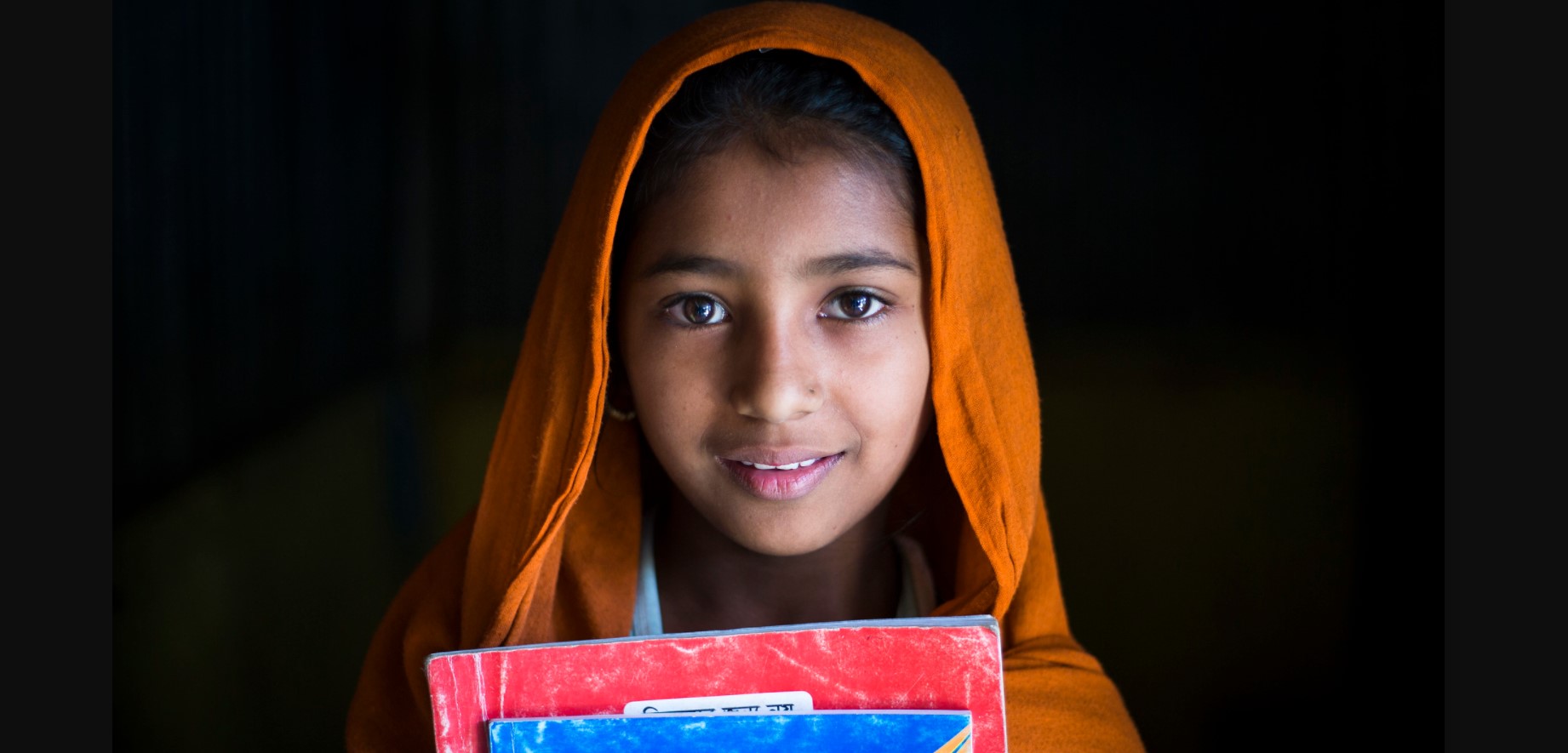
Textbooks are powerful factors in the construction of gender identities. They transmit knowledge and present social and gender norms, shaping the world vision of children and young people. In some contexts, textbooks are the first and sometimes the only books that a young person may read and can have a lasting impact on their perceptions. And yet they still often perpetuate discriminatory social norms and values. This must be challenged.
Under its strategic objective B.4, the Beijing Declaration and Platform for Action, a blueprint for women’s rights signed by 189 countries in 1995 called upon countries to develop curricula, textbooks and teaching aids free of gender-based stereotypes for all levels of education, including teacher training. Twenty-five years after the adoption of this objective, girls and women are still under-represented in textbooks or, when included, depicted in traditional roles in many countries, a truth found in in teaching and learnings materials from all corners of the globe as new analysis in the recently released 2020 GEM Gender Report shows.
…..




 English
 Arabic
 Chinese (Simplified)
 Filipino
 French
 Hindi
Hindi Indonesian
 Italian
 Javanese
 Khmer
Khmer Lao
Lao Malay
Malay Myanmar (Burmese)
 Nepali
 Portuguese
 Russian
 Spanish
 Thai
Thai Vietnamese
Textbooks are powerful factors in the construction of gender identities. They transmit knowledge and present social and gender norms, shaping the world vision of children and young people. In some contexts, textbooks are the first and sometimes the only books that a young person may read and can have a lasting impact on their perceptions. And yet they still often perpetuate discriminatory social norms and values. This must be challenged.
Under its strategic objective B.4, the Beijing Declaration and Platform for Action, a blueprint for women’s rights signed by 189 countries in 1995 called upon countries to develop curricula, textbooks and teaching aids free of gender-based stereotypes for all levels of education, including teacher training. Twenty-five years after the adoption of this objective, girls and women are still under-represented in textbooks or, when included, depicted in traditional roles in many countries, a truth found in in teaching and learnings materials from all corners of the globe as new analysis in the recently released 2020 GEM Gender Report shows.