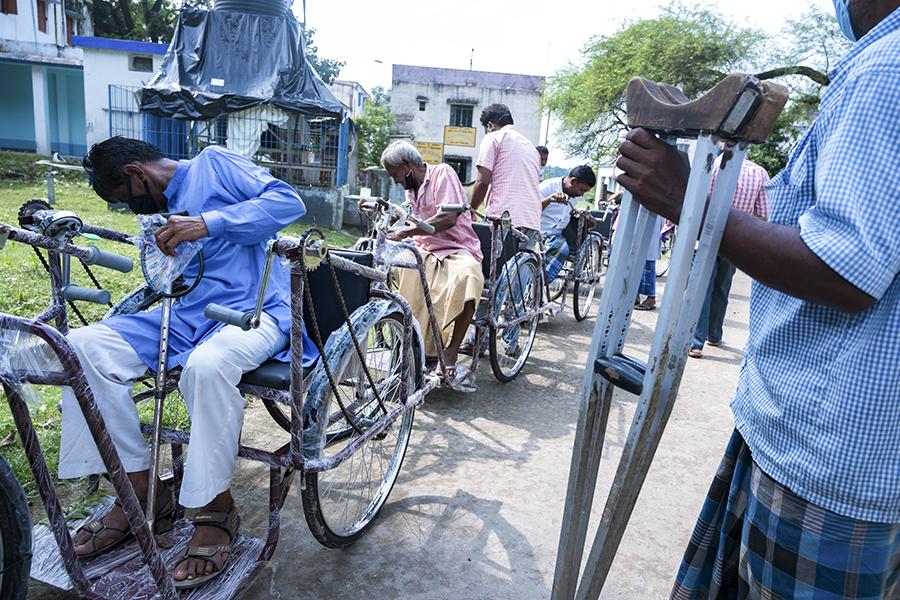
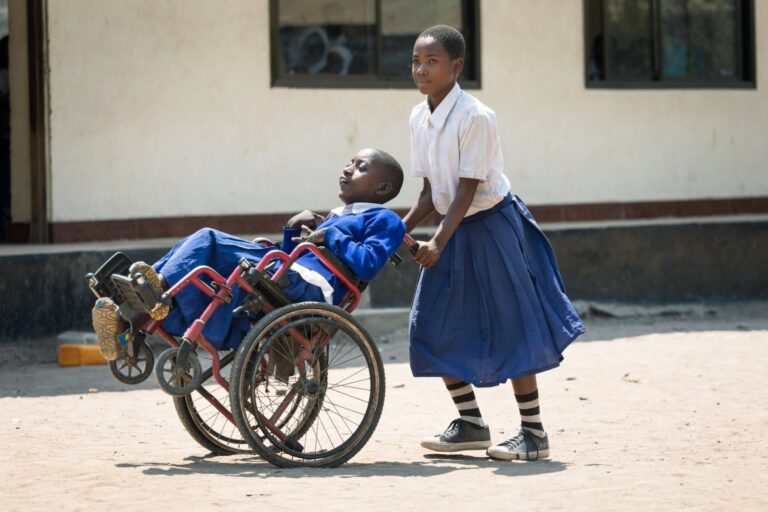
At more than a billion mark, Persons with Disabilities (PwDs) represent 15 percent of the world’s population. Approximately 190 million have severe forms of disabilities, causing significant difficulties in functioning. According to World Health Organisation (WHO), disability is an umbrella term covering impairments, activity limitations, and participation restrictions. Seen from a larger prism, disability is not just a health problem. It is a complex phenomenon. PwDs are among the most marginalised groups, and are more likely to experience adverse socioeconomic outcomes.
PwDs encounter a range of barriers like inaccessibility to transport facilities, lack of infrastructural support, difficulty in access to buildings, roads, and markets, unfavourable public attitudes, and societal prejudices. Disabled people often face unreasonable stigma and social exclusion.
…..




 English
 Arabic
 Chinese (Simplified)
 Filipino
 French
 Hindi
Hindi Indonesian
 Italian
 Javanese
 Khmer
Khmer Lao
Lao Malay
Malay Myanmar (Burmese)
 Nepali
 Portuguese
 Russian
 Spanish
 Thai
Thai Vietnamese
At more than a billion mark, Persons with Disabilities (PwDs) represent 15 percent of the world’s population. Approximately 190 million have severe forms of disabilities, causing significant difficulties in functioning. According to World Health Organisation (WHO), disability is an umbrella term covering impairments, activity limitations, and participation restrictions. Seen from a larger prism, disability is not just a health problem. It is a complex phenomenon. PwDs are among the most marginalised groups, and are more likely to experience adverse socioeconomic outcomes.
PwDs encounter a range of barriers like inaccessibility to transport facilities, lack of infrastructural support, difficulty in access to buildings, roads, and markets, unfavourable public attitudes, and societal prejudices. Disabled people often face unreasonable stigma and social exclusion.