By Dr David Sengeh, Minister of Basic and Senior Secondary Education of Sierra Leone and Chair of the Advisory Board for the GEM Report.
I was only a few months into my new role as Sierra Leone’s Education Minister when COVID-19 hit. Unlike many countries that were caught off guard, we were prepared for the school closures that arise from such pandemics. At the peak of the of the COVID-19 crisis, up to 1.6 billion children did not have access to physical school. The tragic situation with the Ebola crisis in Sierra Leone between 2014 and 2016 meant that this time we were ready to provide distance schooling to 2.6 million students through the interactive Radio Teaching Program.
During the Ebola outbreak, students were out of school for the larger part of nine months. These were the years before Zoom calls and online learning platforms for schools: besides, very few households have access to internet technology in Sierra Leone. Radio programming was chosen to deliver lessons, as it was cost-effective and could be adapted to local languages. Distance learning through radio is also engaging and has been shown to improve learning outcomes.

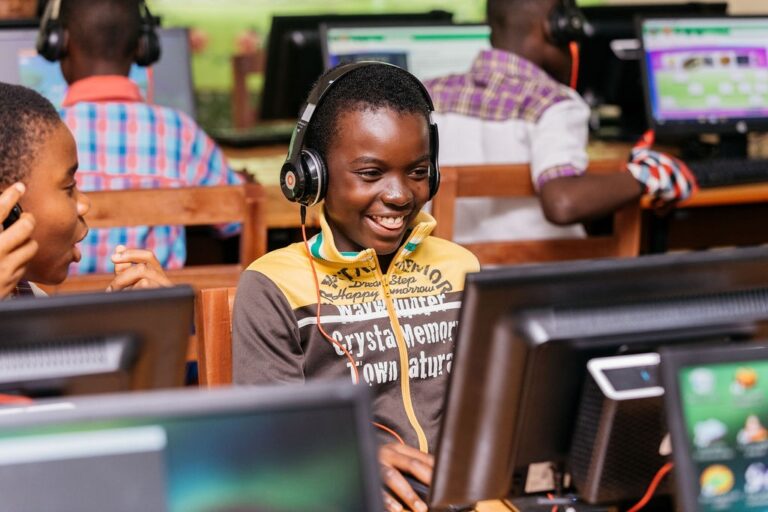
![[Preliminary Report] CRNA Collaborative Research for Exploring Factors Nurturing"Happy and Resilient" Children among Asian Countries](https://equity-ed.net/wp-content/uploads/2024/09/1725672182698.jpg)



 English
 Arabic
 Chinese (Simplified)
 Filipino
 French
 Hindi
Hindi Indonesian
 Italian
 Javanese
 Khmer
Khmer Lao
Lao Malay
Malay Myanmar (Burmese)
 Nepali
 Portuguese
 Russian
 Spanish
 Thai
Thai Vietnamese
By Dr David Sengeh, Minister of Basic and Senior Secondary Education of Sierra Leone and Chair of the Advisory Board for the GEM Report.
I was only a few months into my new role as Sierra Leone’s Education Minister when COVID-19 hit. Unlike many countries that were caught off guard, we were prepared for the school closures that arise from such pandemics. At the peak of the of the COVID-19 crisis, up to 1.6 billion children did not have access to physical school. The tragic situation with the Ebola crisis in Sierra Leone between 2014 and 2016 meant that this time we were ready to provide distance schooling to 2.6 million students through the interactive Radio Teaching Program.
During the Ebola outbreak, students were out of school for the larger part of nine months. These were the years before Zoom calls and online learning platforms for schools: besides, very few households have access to internet technology in Sierra Leone. Radio programming was chosen to deliver lessons, as it was cost-effective and could be adapted to local languages. Distance learning through radio is also engaging and has been shown to improve learning outcomes.