To provide the best experiences, we use technologies like cookies to store and/or access device information. Consenting to these technologies will allow us to process data such as browsing behavior or unique IDs on this site. Not consenting or withdrawing consent, may adversely affect certain features and functions. https://equity-ed.net/cookies-policy/
The technical storage or access is strictly necessary for the legitimate purpose of enabling the use of a specific service explicitly requested by the subscriber or user, or for the sole purpose of carrying out the transmission of a communication over an electronic communications network.
The technical storage or access is necessary for the legitimate purpose of storing preferences that are not requested by the subscriber or user.
The technical storage or access that is used exclusively for statistical purposes.
The technical storage or access that is used exclusively for anonymous statistical purposes. Without a subpoena, voluntary compliance on the part of your Internet Service Provider, or additional records from a third party, information stored or retrieved for this purpose alone cannot usually be used to identify you.
The technical storage or access is required to create user profiles to send advertising, or to track the user on a website or across several websites for similar marketing purposes.






 English
 Arabic
 Chinese (Simplified)
 Filipino
 French
 Hindi
Hindi Indonesian
 Italian
 Javanese
 Khmer
Khmer Lao
Lao Malay
Malay Myanmar (Burmese)
 Nepali
 Portuguese
 Russian
 Spanish
 Thai
Thai Vietnamese
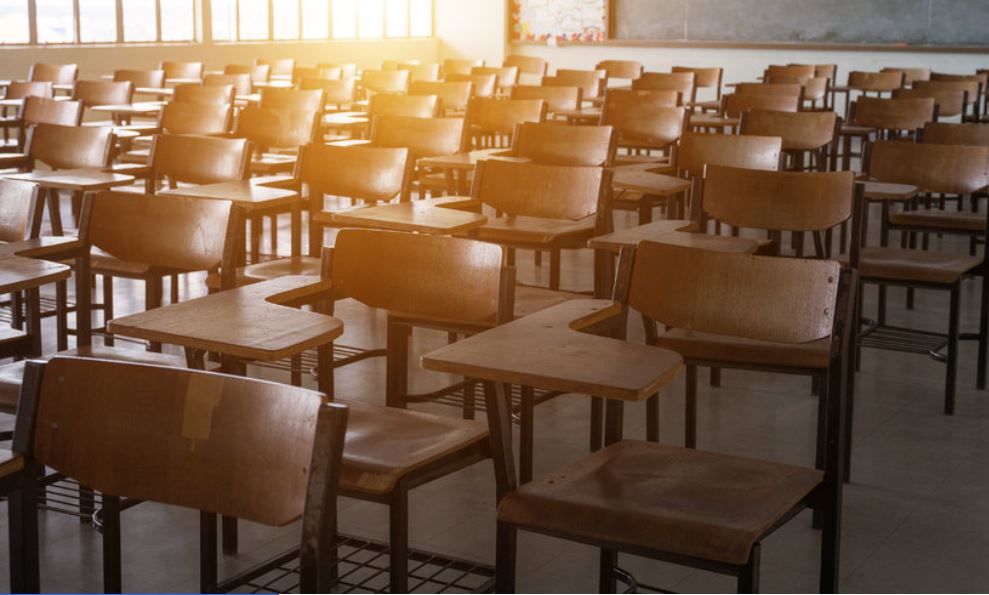
When COVID-19 shut schoolhouse doors in March, it illuminated how vital our nation’s schools are in providing not just academic learning but also services for our children’s growth and well-being. Yet, as schools work to reopen and the pandemic wreaks havoc on state revenues, K-12 education is at risk of facing some of the largest budget constraints in recent history.
Given this impending challenge, now is the time for the federal government to step in with funding support to safely reopen schools and address the educational gaps resulting from COVID-19. As Jay Nichols, the executive director of the Vermont Principals Association, put it to the state Senate Finance Committee, “How can we contemplate cutting staff when we know students will be coming back to school with educational gaps? Most alarming will most assuredly be increases in social, emotional and trauma-related concerns.”
Federal support, however, is not sustainable in the long term, so states and school districts must work to re-evaluate education spending, making creative but hard decisions to become more financially efficient…………………………………………………………….